
Jara MacDermott Sanction: Testosterone IRMS, TUE Rules, and the Two-Year Ban
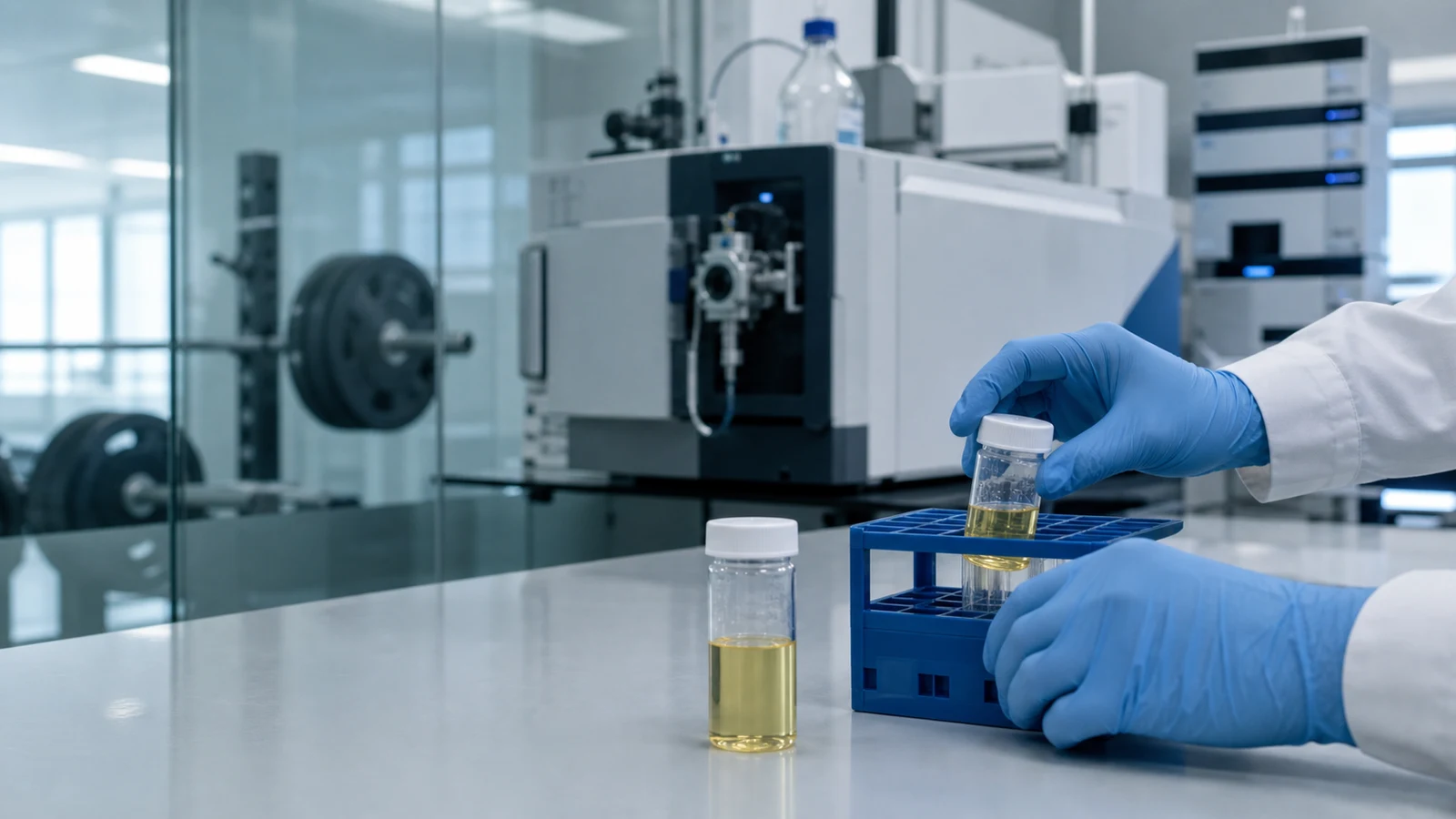
U.S. weightlifter Jara MacDermott accepted a two-year anti-doping sanction after a competition sample contained canrenone, amphetamine, and testosterone or its metabolites, USADA announced on August 20, 2026.
The testosterone finding was supported by isotope-ratio mass spectrometry, or IRMS, showing a pattern consistent with an external source. USADA said the substances were used under a physician's direction, but MacDermott did not have the therapeutic-use exemptions required under the applicable rules.
The case shows why a prescription and a valid TUE are different documents. It also shows how laboratory evidence can distinguish administered testosterone from the hormone naturally produced by the body.
The official case details
According to USADA's sanction announcement, MacDermott provided a sample on December 4, 2025, at the United Masters Weightlifting Federation World Championships.
The sample tested positive for canrenone, a metabolite of spironolactone; amphetamine; and testosterone or its metabolites. Further IRMS analysis was consistent with testosterone from an external source.
Under the prohibited-list classifications cited by USADA, spironolactone is a specified diuretic and masking agent. Amphetamine is a non-specified stimulant. Testosterone is a non-specified anabolic agent. “Specified” in this context does not mean permitted or unimportant; it is a technical classification that affects how anti-doping rules evaluate circumstances and sanctions.
USADA imposed a two-year period of ineligibility beginning December 23, 2025, the date the provisional suspension started. The agency also said competitive results obtained on or after June 1, 2018, were disqualified.
Why the sanction was two years
USADA's announcement says the circumstances supported a reduction from the default four-year sanction. The agency reported that the substances were being used under a physician's direction, while also noting that no valid TUEs covered the use.
A reduced sanction is not an approval of the treatment. Anti-doping rules consider factors such as intent, fault, substance classification, and the evidence explaining how a prohibited substance entered the body. The exact application is case-specific.
It is therefore inaccurate to reduce the decision to either “a prescription makes it legal” or “all three findings automatically require four years.” The official outcome was two years based on the circumstances accepted in the case.
A prescription is not a TUE
A clinician can prescribe a medication under medical law and professional practice. A therapeutic-use exemption is a sport authorization that permits an athlete to use a prohibited substance or method when defined anti-doping criteria are met.
The processes overlap in medical evidence but serve different purposes. A prescription may show that a clinician directed treatment. It does not by itself show that the athlete applied for, received, and complied with a TUE recognized by the governing anti-doping organization.
Athletes subject to testing need to check every medication before use, including changes in dose or route. They also need to understand whether an exemption must be granted in advance and which organization has authority. Waiting for a positive result to begin the process can leave no valid authorization for the sample date.
That administrative detail is not optional paperwork. It is part of how sport separates legitimate treatment from prohibited enhancement while attempting to protect medical privacy and competitive fairness.
What IRMS adds to a testosterone case
The body naturally produces testosterone, so a laboratory cannot treat the mere presence of the hormone as proof of administration. Initial steroid-profile testing looks for patterns and ratios that may indicate an atypical result.
IRMS compares carbon-isotope signatures in steroid metabolites. Pharmaceutical testosterone is commonly derived from plant sources with a different isotopic pattern from endogenous hormones. A consistent difference can support the conclusion that testosterone came from outside the body.
IRMS does not reveal why a substance was used or decide whether a TUE exists. It answers a laboratory question about origin. The legal and rule-based questions—authorization, intent, fault, and sanction—are evaluated with additional evidence.
This distinction helps explain the structure of USADA's announcement: the laboratory result supported exogenous origin, while the case circumstances addressed physician direction and the absence of valid exemptions.
Why canrenone and amphetamine also matter
Canrenone indicates exposure to spironolactone. In anti-doping rules, diuretics can change fluid balance and may mask the presence or concentration of other substances. A medically familiar drug can therefore remain prohibited in sport.
Amphetamine is a stimulant with potential performance and health effects. Its status can depend on the competition period and governing list, but athletes cannot assume that a prescription eliminates anti-doping requirements.
Multiple findings do not necessarily mean multiple independent intentions. They do, however, create a more complex case because each substance has its own classification, medical explanation, and authorization question.
The long disqualification period
The announcement states that results on and after June 1, 2018, were disqualified. Disqualification and ineligibility are related but different. Ineligibility controls when an athlete may participate going forward. Disqualification removes results and can entail loss of medals, points, or prizes for the specified period.
Readers should not infer additional competition details that USADA did not list in the announcement. The reliable facts are the date boundary and the consequences stated by the authority.
What athletes can learn
Medication review must happen before competition, not after a laboratory notification. Athletes can use their anti-doping organization's medication resources, preserve clinical documentation, and determine whether a TUE application is required. When rules or health decisions are unclear, qualified medical and anti-doping professionals should be involved.
The site's educational overview of testosterone enanthate risks provides medical and nonmedical context, but sport authorization remains a separate question under anti-doping rules.
MacDermott's case should not be used to judge the appropriateness of an individual's medical care. Its documented significance is procedural and evidentiary. A physician-directed course included prohibited substances, the required TUEs were absent, IRMS supported an external testosterone source, and the accepted outcome was a two-year ban with earlier results disqualified.
More Peptides
 Peptides
Laura Meador Sanction: IRMS Testosterone Finding and Four-Year Ban
An independent arbitrator imposed a four-year sanction on masters weightlifter Laura Meador after USADA presented an IRMS finding consistent with exogenous testosterone.
 Peptides
FDA’s September 2026 Peptide Warning-Letter Sweep: What It Means
FDA posted warning letters to several peptide sellers on September 1. The letters focus on intended use, unapproved new drugs, misbranding, and injectable risks.
 Peptides
Paul Askew Sentencing: How the Rodchenkov Anti-Doping Act Reached a Doping Supplier
Paul Askew received a six-month federal prison sentence after pleading guilty to a conspiracy involving testosterone and a professional track athlete.