
Creatine for Vegan Athletes: What a New Four-Week Trial Actually Shows
Twenty physically active adults following vegan diets entered a four-week creatine trial. Ten received creatine monohydrate and ten received placebo. At the end, the creatine group improved several jump measures and showed changes in estimated skeletal muscle mass, water, and fat mass, but the study found no change in sprint or strength tests.
That mixed result is more useful than a headline claiming creatine “works for vegans.” It suggests a possible lower-body power effect in this small sample while leaving uncertainty about maximal strength, longer-term outcomes, and the size of any body-composition change that is independent of water.
A small but carefully blinded study
The trial was randomized, placebo controlled, and triple blind. It enrolled vegan adults aged 18–45 who were physically active. Each group contained five women and five men, which balanced sex across conditions but left only 20 participants in total.
Participants followed a normocaloric vegan diet. The creatine group received 0.1 grams of creatine monohydrate per kilogram of body mass per day for four weeks, while the control group received placebo. That dose is reported to explain the methods and should not be read as individualized advice.
Researchers assessed body composition, countermovement jump, sprint performance, repeated jumps, handgrip strength, isometric mid-thigh pull, and renal biomarkers at baseline and after the intervention. The study is registered as NCT06483321.
Jump performance changed; strength tests did not
The clearest performance differences were in lower-body explosive tasks. The abstract reports improvement in countermovement jump and in maximum height and flight time during repeated jumps, with P values ranging from below 0.001 to 0.04.
Sprint performance and the measured strength tests did not change. That matters because power and strength are related but not interchangeable. A countermovement jump rewards rapid force production and coordination. Handgrip and an isometric mid-thigh pull ask different questions. The trial does not support claiming a general improvement in every type of muscular performance.
The paper’s conclusion uses the phrase “muscle strength and lower-body muscular power,” but the reported abstract results are more specific: jump measures improved, while sprint and strength tests did not. Readers should privilege the named outcomes over a broad label.
Body composition needs cautious interpretation
Compared with controls, the creatine group showed a 0.3 kg increase in estimated skeletal muscle mass, a 1.4 kg increase in total body water, a 0.3 kg/m² increase in BMI, and a 1.4 kg reduction in body fat. These differences were statistically significant in the report.
Creatine draws water into muscle tissue, so an early rise in total body water is expected and can influence body-composition estimates. Four weeks is also a short period in which to attribute a small change in “skeletal muscle mass” entirely to new contractile protein. The numbers are still observations from the trial, but they should not be marketed as a guaranteed amount of muscle or fat change.
The normocaloric diet reduces one source of variation, yet real dietary intake and measurement error remain relevant. Larger studies using multiple body-composition methods would give more confidence about how much of the change reflects water, lean tissue, or estimation noise.
Creatinine rose, which is not the same as proving kidney damage
Serum creatinine and creatine concentrations increased in the supplement group. Creatinine is a breakdown product related to creatine metabolism and is also used in common estimates of kidney filtration. Supplementation can therefore change the marker without automatically establishing kidney injury.
The study measured renal biomarkers, but four weeks and 20 healthy adults cannot establish long-term safety for every population. People with kidney disease, medical conditions, pregnancy, or medications that affect renal function need professional medical guidance. A research finding in healthy volunteers should never replace clinical evaluation.
Why vegan diets are a distinct question
Creatine occurs naturally in animal-derived foods, so people eating fully plant-based diets generally have lower dietary creatine exposure. That creates a plausible reason to study whether supplementation produces a different response than it might in omnivores.
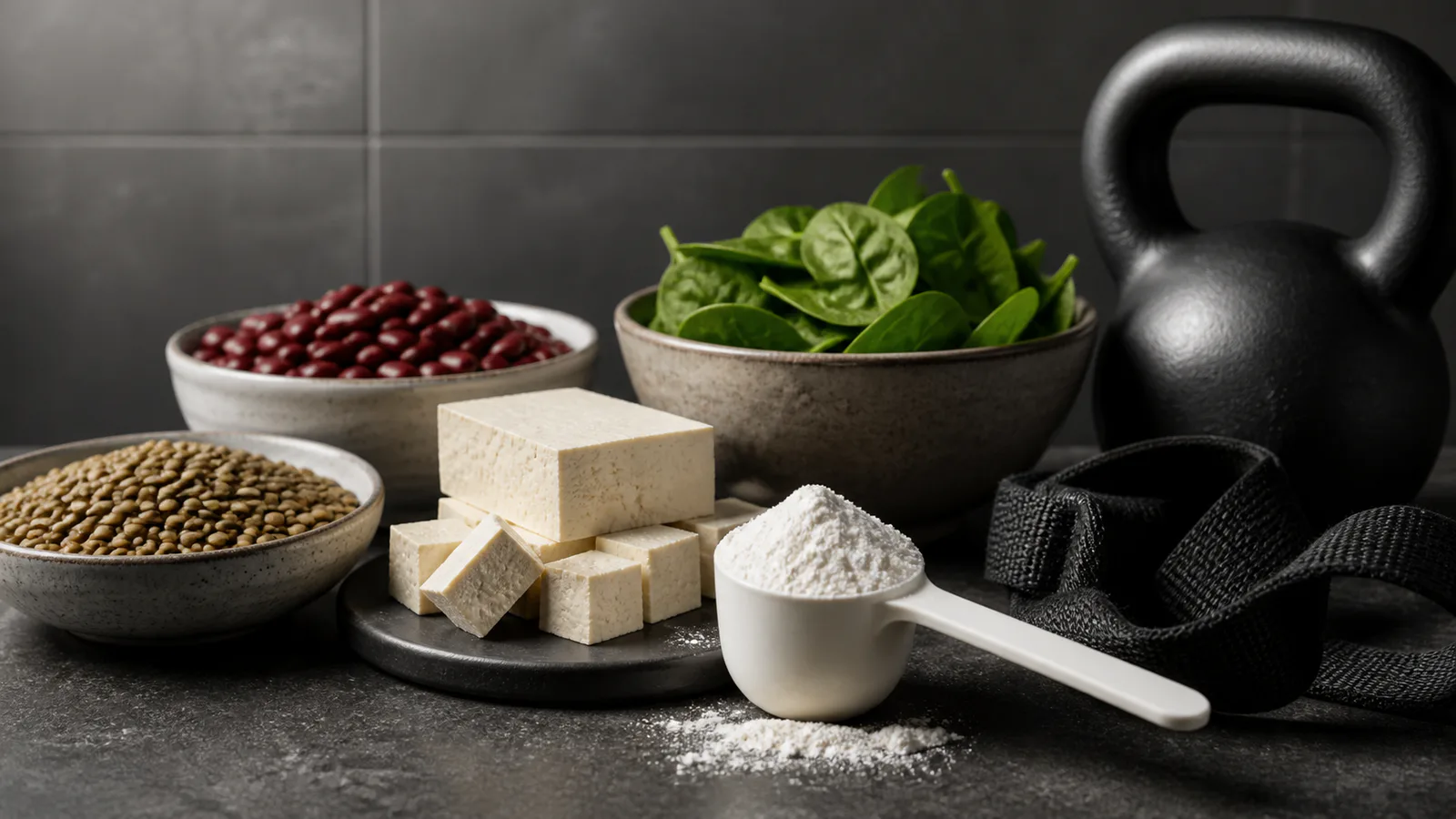
The trial does not mean a vegan diet is inadequate for strength training. Beans, lentils, tofu, grains, nuts, and other plant foods can support protein and energy needs when the diet is planned appropriately. Creatine is a specific compound, not a proxy for overall diet quality.
It also does not compare vegans directly with omnivores. Both trial groups followed vegan diets, and the comparison was creatine versus placebo. Any claim that vegans benefit more than meat eaters would require a different design.
Conflicts and limits belong in the result
The authors reported that one researcher had consulting fees from food companies outside the submitted work. Another was a scientific adviser to a creatine gummy company and had received donated creatine for research purposes. Disclosures do not invalidate a paper, but they are relevant when the topic is a commercial supplement.
The larger limitation is statistical: ten people per condition. Small trials are vulnerable to unstable estimates and chance imbalances, even when randomization and blinding are strong. The intervention was also too short to answer whether the changes persist, grow, or disappear over months.
The primary source is the 2026 trial indexed by PubMed (PMID 42390589; DOI 10.1007/s00421-026-06323-5). The associated ClinicalTrials.gov record describes the registered study.
For athletes, the defensible reading is narrow: four weeks of creatine improved jump-related measures in this small active vegan sample, while sprint and strength tests did not improve. It is a reason for more research, not a reason to promise a particular gain. Broader nutrition articles remain available in the Jacked Forums Diet archive, and training adaptations should still be interpreted alongside the program that produced them.
More Diet
 Diet
DietVegan Diet, Muscle Loss, and Resistance Training in Older Adults: New Trial
In a 12-week trial, a self-selected vegan diet reduced protein intake and muscle measures in adults over 65. Resistance training mitigated, but did not erase, the losses.
 Diet
DietFood Order for Athletes: Carbs First or Vegetables and Protein First?
In 14 trained footballers, eating carbohydrate last lowered the early glucose rise but increased hunger and cravings. Later food intake did not change.
 Diet
DietCreatine With Resistance Training After 60: Strength, Muscle, and Function Evidence
A 2026 meta-analysis of 11 trials found a modest strength benefit when adults over 60 combined creatine with resistance training, while muscle and function estimates remained uncertain.