
Vegan Diet, Muscle Loss, and Resistance Training in Older Adults: New Trial
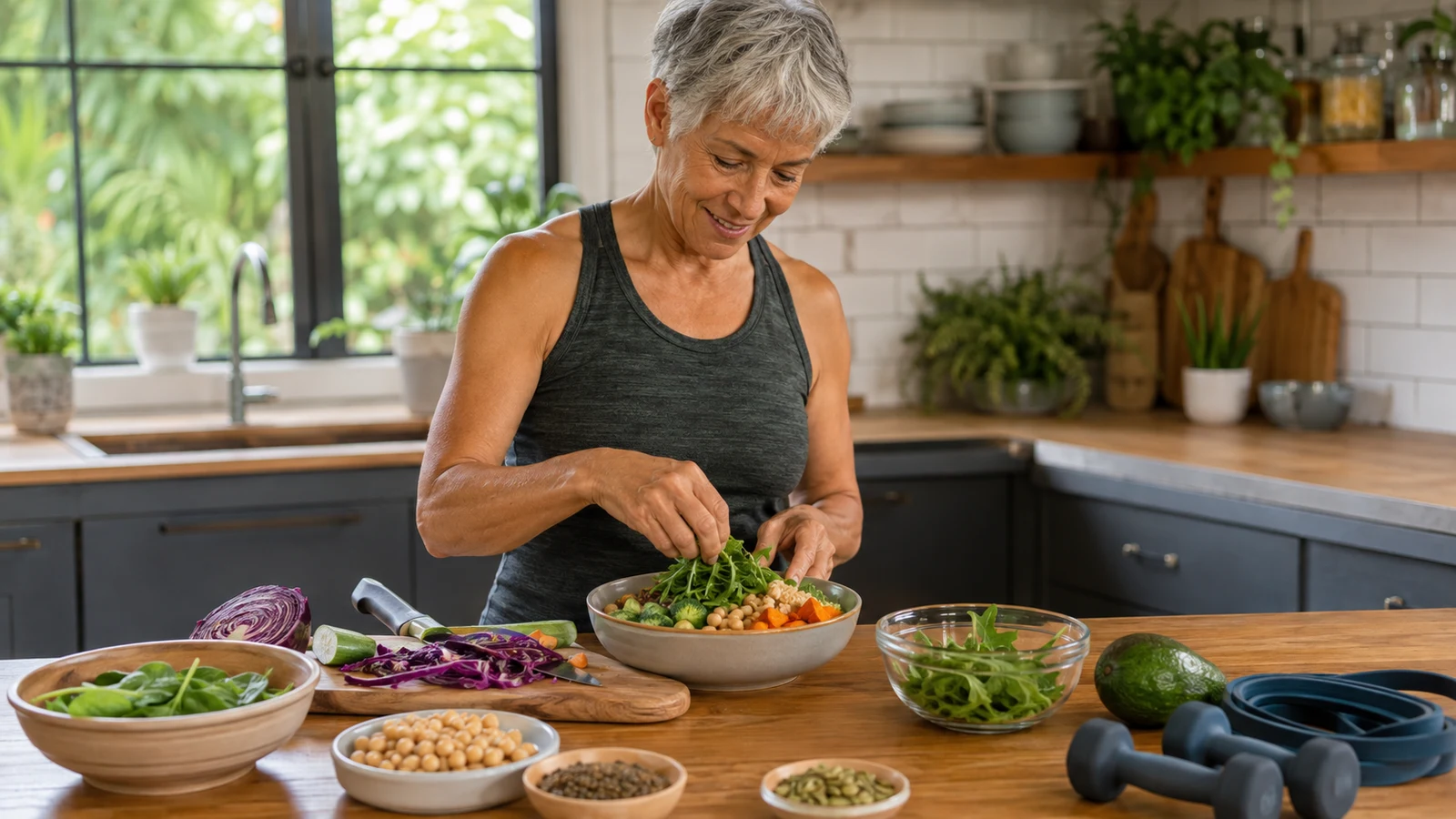
A 12-week self-selected vegan diet reduced protein intake, thigh muscle volume, appendicular lean mass, and measured muscle protein synthesis in healthy adults aged 65 and older. Adding resistance exercise mitigated several losses, but it did not make the vegan-plus-training group identical to the habitual omnivorous group.
The study does not show that every vegan diet causes muscle loss. It tested what happened when older adults selected their own vegan foods without a reported protein-matching intervention. Protein intake fell substantially. The result is best read as a warning about planning, not a verdict on plant foods.
How the 12-week trial worked
The randomized controlled trial assigned 72 healthy adults aged 65 or older to one of three groups: a self-selected vegan diet, their habitual omnivorous diet, or a self-selected vegan diet combined with resistance exercise.
Researchers used magnetic resonance imaging to measure thigh muscle volume and fat infiltration, DXA to estimate appendicular lean mass, and dynamometry for strength. Muscle protein synthesis was measured during the first ten days using a deuterium-oxide protocol. Dietary intake, body mass, and physical activity were also tracked.
This design answers a practical question: what happens when people switch diets under ordinary food-choice conditions? It does not isolate plant versus animal protein while keeping total protein, calories, and amino-acid distribution perfectly matched.
Protein intake dropped in both vegan groups
The diet-only vegan group reduced protein intake by about 27.7 grams per day in week one, 22.0 grams in week six, and 19.3 grams in week 12 compared with baseline. The vegan-plus-exercise group showed a similar decrease. Protein intake did not change in the omnivorous group.
This is the central context for every muscle result. Older adults often need more attention to protein density because appetite, meal size, anabolic sensitivity, and total energy intake can work against them. Removing familiar protein sources without deliberate replacements can lower the daily total even when the new diet includes nutritious foods.
The trial therefore cannot tell us whether a vegan diet with protein matched to the omnivorous group would produce the same result.
Muscle volume and lean mass fell most without training
Thigh muscle volume decreased by an estimated 0.61 litres in the vegan diet-only group. It changed by about 0.01 litres in the omnivorous group and fell by 0.35 litres in the vegan-plus-resistance-exercise group.
Appendicular lean mass decreased by 1.15 kilograms in the vegan diet-only group, compared with a small estimated increase of 0.05 kilograms in the omnivorous group. The vegan-plus-training group lost 0.62 kilograms.
Resistance exercise therefore reduced the size of the decline, but the group still lost measured lean tissue during the 12 weeks. That distinction matters. “Mitigated” means made smaller; it does not mean fully prevented.
DXA lean mass can be affected by hydration and glycogen, while MRI offers a more direct look at thigh tissue. Seeing a compatible pattern across both measures makes the signal harder to dismiss, though no single trial settles the issue.
Muscle protein synthesis was lower
Measured muscle protein synthesis averaged 1.09 percent per day in the vegan diet-only group, 1.27 percent in the omnivorous group, and 1.24 percent in the vegan-plus-training group during the assessment period.
The exercise group's value being close to the omnivorous group supports resistance training as a powerful anabolic stimulus. Yet synthesis was measured during the first ten days, whereas body-composition outcomes covered 12 weeks. Short-term synthesis rates help explain a mechanism but do not map perfectly onto every later change.
What the study does not prove
It does not prove animal protein is required to maintain muscle. The intervention was self-selected, and total protein fell. A carefully planned vegan diet can use soy foods, seitan, legumes, higher-protein grains, pea or soy protein powders, and fortified foods to raise intake.
The trial also does not identify the perfect protein target for each participant. Needs vary with body size, energy intake, health, kidney function, training status, and medical advice. Older adults with chronic disease should discuss large dietary changes with an appropriate clinician or dietitian.
Nor should the result be used to discourage resistance training because the exercise group still lost some measured tissue. Training substantially improved the comparison with the vegan diet alone and likely provided benefits beyond the outcomes summarized here.
Practical protein planning for older vegan lifters
Start by replacing protein, not just removing food. Build each main meal around a substantial source such as tofu, tempeh, textured vegetable protein, seitan, lentils plus a higher-protein grain, or a plant-protein shake. Count the actual daily total for a week rather than assuming a “healthy” pattern is automatically protein sufficient.
Distribute protein across meals. A day with most protein at dinner leaves breakfast and lunch with weak opportunities for muscle protein synthesis. Each meal should make a meaningful contribution, while total energy remains adequate.
Continue progressive resistance training two or more times per week as ability and recovery allow. Machines, free weights, bands, and bodyweight can all work when exercises are progressed and major muscle groups are trained. Beginners and people with balance or medical concerns may benefit from supervision.
Monitor body weight, gym performance, appetite, and recovery. Unintended weight loss, declining strength, or difficulty meeting protein needs are reasons to adjust food choices and seek professional help.
The site's comparison of plant and animal protein provides broader context: source matters less when quantity, quality, and the overall diet are deliberately managed. This new trial shows what can happen when that management is absent.
The takeaway is not “avoid vegan diets.” It is “do not let a diet label do the planning.” In older adults, a casual switch reduced protein and coincided with meaningful muscle losses. Resistance training softened the effect. A better-designed protein intake is the obvious variable for future trials—and the practical variable people can address now.
More Diet
 Diet
DietFood Order for Athletes: Carbs First or Vegetables and Protein First?
In 14 trained footballers, eating carbohydrate last lowered the early glucose rise but increased hunger and cravings. Later food intake did not change.
 Diet
DietCreatine With Resistance Training After 60: Strength, Muscle, and Function Evidence
A 2026 meta-analysis of 11 trials found a modest strength benefit when adults over 60 combined creatine with resistance training, while muscle and function estimates remained uncertain.
 Diet
DietDo More Carbs Build More Muscle? What the 2026 Meta-Analysis Found
A 2026 meta-analysis found no clear independent hypertrophy advantage from higher carbohydrate intake when resistance-training studies were pooled, but the evidence remains limited.