
Accentuated Eccentric Training Once, Twice, or Three Times Weekly
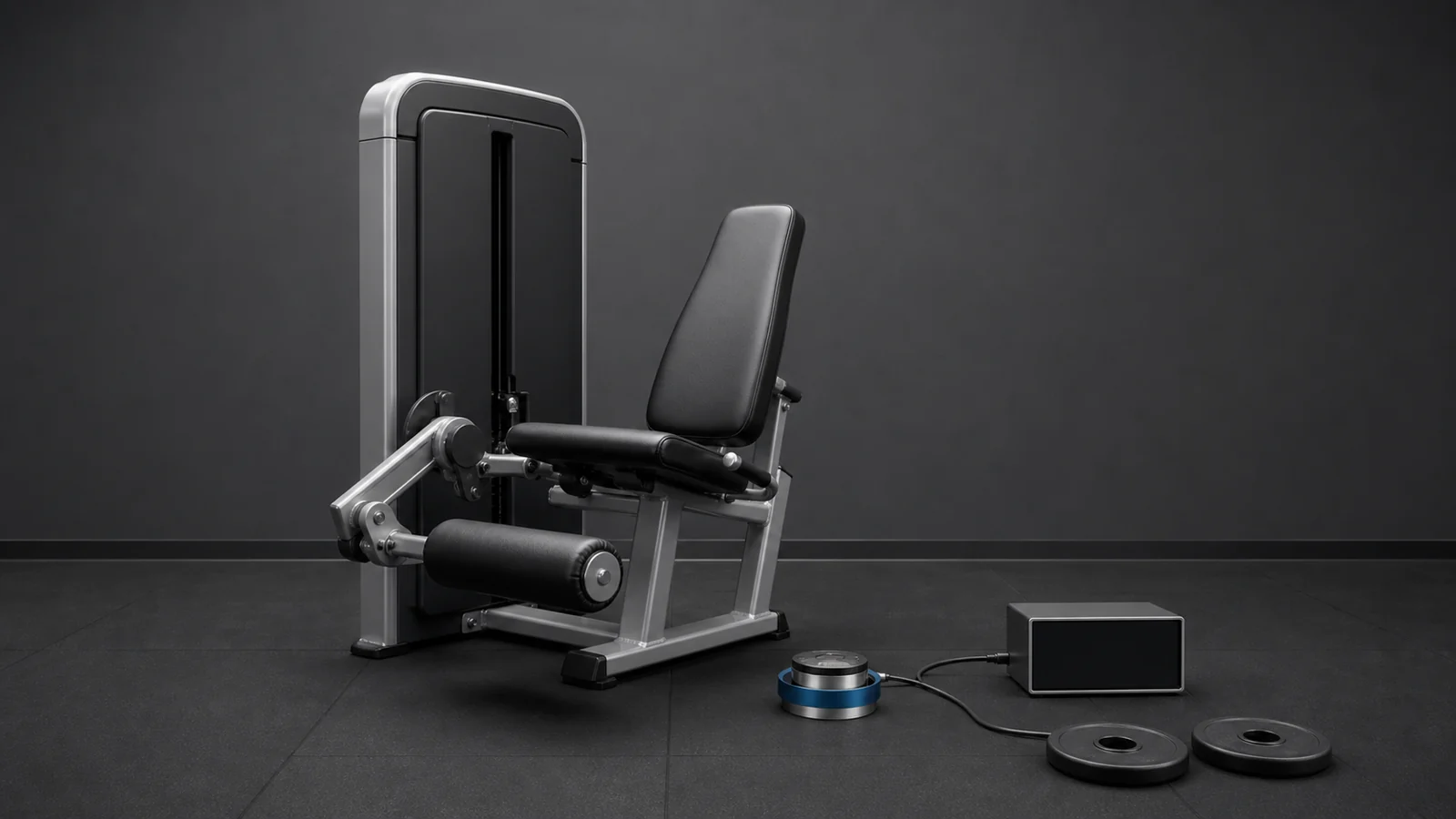
The three schedules in the 12-week accentuated-eccentric squat study can be read at a glance:
| Group | Athletes | Sessions per week | Per-session dose | Weekly exposure |
|---|---|---|---|---|
| EX1 | 7 | 1 | Equal across groups | Lowest |
| EX2 | 9 | 2 | Equal across groups | Middle |
| EX3 | 7 | 3 | Equal across groups | Highest |
All three improved. The sole statistically significant between-group result reported in the abstract favored EX3 over EX1 for maximal concentric strength (p=.03). No other measured strength, power, endurance, or muscle-size outcome clearly separated the schedules.
What accentuated eccentric loading changes
Accentuated eccentric loading, or AEL, deliberately makes the lowering phase heavier than the lifting phase. In a squat, the athlete descends under the accentuated load and then completes the concentric ascent under a load that can be managed. This is not simply lowering an ordinary bar slowly. It requires a practical way to change or release load between phases and places specific demands on setup, technique, and recovery.
Why frequency also changed dose
The trial used the full squat for training and several performance tests. Twenty-three strength-trained athletes were allocated across the three groups. Because the per-session dose stayed equal, EX3 accumulated three times as many weekly exposures as EX1.
The per-session dose was held equal. That detail prevents one common misunderstanding but creates another: EX3 completed three such exposures per week while EX1 completed one. A difference between those groups could reflect frequency, total weekly work, or their combination. Without matched weekly exposure, the trial cannot tell us whether splitting the same dose across more days would reproduce the result.
This makes “frequency” an incomplete label. A difference could come from more practice days, more total AEL work, or both. A volume-matched design would need to divide the same weekly work differently. The new volume-and-frequency analysis explains why those variables are difficult to separate.
Outcome-by-outcome, not winner-by-winner
Across all three groups, maximal isometric strength increased by 9.1% on average, maximal concentric strength by 9.3%, and maximal eccentric strength by 14.0%. Strength endurance in the 70% test improved by 28.6%. Each of those changes was statistically significant at p<0.001, according to the study abstract and full record.
The power tests moved as well. Squat-jump performance improved by 7.3%, while countermovement-jump performance improved by 4.4%. Computed tomography showed a 3.6% average increase in quadriceps cross-sectional area and a 2.1% increase in thigh cross-sectional area.
Those are pooled changes across the groups, not proof that every athlete gained exactly that amount. The reported variability was wide: for example, the 14.0% eccentric-strength improvement carried a standard deviation of 6.7%, and the 28.6% endurance improvement a standard deviation of 16.2%. Individual responses within a group were not interchangeable.
The important comparison is not whether the pooled sample improved. It is whether one weekly schedule produced reliably different changes from another.
The only direct separation was greater maximal concentric-strength improvement in EX3 than EX1. The authors otherwise characterized one, two, and three weekly sessions as producing similar effects on maximum strength, power, and hypertrophy.
This distinction matters. A significant improvement inside EX3 and no significant improvement inside EX1 would not, by itself, establish that the groups differed. Here the abstract does report a direct EX3-versus-EX1 difference for concentric strength. It does not report the same separation for maximal eccentric or isometric strength, endurance, jumps, or cross-sectional area.
It would also be a mistake to turn “no detected between-group difference” into proof of identical effects. With only 23 athletes divided into groups of seven, nine, and seven, the study had limited precision for separating schedules. Similar estimates may reflect genuinely similar effects, uncertainty around the estimates, or both. The safest reading keeps the positive result and the imprecision in view at the same time.
Why the trained-athlete sample matters
The participants were strength trained, which improves relevance for experienced athletes compared with a novice-only trial. The narrow exercise model creates an equally important boundary. This was AEL in the full squat, not a full-body bodybuilding routine with presses, pulls, single-joint work, and different eccentric methods.
The equipment and execution also matter. A lifter doing conventional squats three days per week is not automatically performing the same stimulus. Nor does the study show that adding heavy eccentric work to three existing lower-body sessions is safe or productive. The groups followed the study intervention; the paper does not grant a universal recovery capacity.
Allocation should be described carefully. The PubMed abstract says athletes were allocated to groups, but it does not say the allocation was randomized or that participants and assessors were blinded. Those details should not be assumed. The study was funded by the Norwegian Olympic Sports Center, and the authors declared no conflict of interest related to the work.
For a coach already equipped to use AEL, the trial shows meaningful adaptations across a wide frequency range. More days were not consistently better across the measurement battery. The concentric-strength advantage may matter when the goal and setup resemble the study, but it does not make three weekly AEL sessions a default.
Weekly exposure should be part of the decision. Because the session dose remained equal, moving from one to three days increased the amount of AEL work. The new volume-and-frequency meta-regression explains why these variables can be hard to separate. A program that needs more practice opportunities might add a day while reducing the dose per day; that is a reasonable programming strategy, but it is not the intervention tested here.
Exercise specificity is the other filter. The improvements were assessed around squatting, thigh muscle size, and jump performance. They do not settle how often to use accentuated eccentric bench presses, flyes, leg curls, or overloaded negatives. Readers comparing range-of-motion questions can find a different exercise-specific design in the long-length partials study.
The next study this result calls for
A stronger frequency test would hold total weekly AEL exposure constant, randomize a larger trained sample, and spread the same work across one, two, or three days. It could also track recovery and extend beyond a single squat pattern. Until such a comparison exists, the unanswered question is not whether AEL works—the athletes improved—but whether frequency itself caused the isolated EX3 advantage once weekly dose is equal.
More Training
 Training
Slow vs Traditional Squat Tempo to Failure: What the Study Found
A crossover study compared slow and traditional barbell squats taken to failure. The tempos redistributed stress rather than producing one universal winner.
 Training
Flywheel Training Microdosing: One Set Daily vs One Weekly Session
A six-week trial split the same 30 flywheel leg-press sets into daily microdoses or one weekly session. Strength gains were similar, but soreness and architecture differed.
 Training
Resistance Bands vs Free Weights for Older Adults: Results of a 12-Week Trial
A 12-week randomized trial found that elastic-band and free-weight programs both improved several functional tasks in adults around age 67, with no clear overall winner.