
Long-Length Partials vs Full Range of Motion: Reading the New Knee-Extension Study
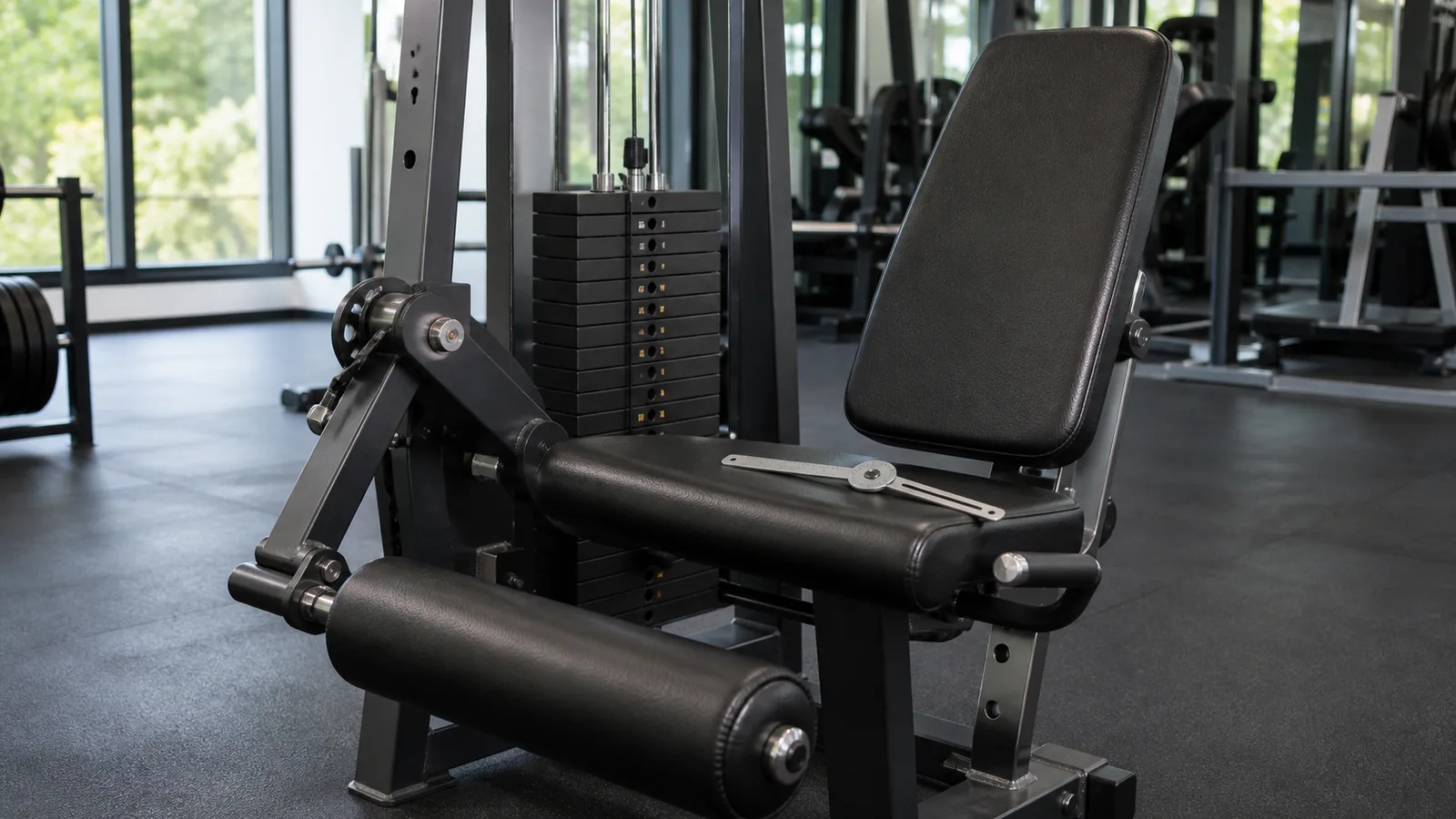
A new range-of-motion study adds evidence for training a muscle in its longer position, but it does not make full repetitions obsolete. In the eight-week experiment, moderate-intensity knee extensions performed through the lengthened portion of the movement produced similar regional vastus lateralis thickness changes to heavier full-range knee extensions. Shortened partials generally fared worse at several measurement sites.
The comparison is more informative than a before-and-after gym clip because the researchers assigned 45 participants to four groups and measured muscle architecture at three positions along the thigh. It is also much narrower than the claim that “partials beat full ROM” on every exercise.
Four groups, three ranges
The study assigned participants to a shortened-partial group, a lengthened-partial group, a full-range group, or a nontraining control. All training involved knee extensor exercise for eight weeks.
The ranges and loads were deliberately different:
- Shortened partials used 0–50 degrees of knee flexion at 80% of 1RM.
- Lengthened partials used 40–90 degrees of knee flexion at 55% of 1RM.
- Full range used 0–90 degrees at 80% of 1RM.
In the authors’ convention, the 40–90-degree segment placed the knee extensors in the longer region. The moderate load in that group matters. The experiment was not simply a contest between identical loads moved through different distances.
Researchers measured vastus lateralis muscle thickness, pennation angle, and fascicle length at 25%, 50%, and 75% of femur length before and after training. Regional measurements can reveal changes that a single mid-thigh reading misses.
Similar thickness for lengthened partials and full ROM
Muscle-thickness changes did not differ between the lengthened-partial and full-range groups at any of the three sites. Both produced greater change than shortened partials in parts of the muscle: lengthened partials exceeded shortened partials at the 25% and 75% locations, while full range exceeded shortened partials at the 50% and 75% locations.
That pattern favors exercises that include the longer-muscle region, whether the repetition stops there or continues through the full range. It does not show that the shortened region is useless. The shortened-partial group trained, but its regional thickness response was smaller at specified sites under this program.
The paper also reported fascicle-length differences. Lengthened partials produced greater fascicle-length change than full range at the 25% and 75% sites, and greater change than shortened partials at all sites. Full range exceeded shortened partials at 50% and 75%. Baseline fascicle length was inversely correlated with its change, meaning participants who began with longer fascicles tended to show less increase.
Fascicle length is an architectural measure, not a direct score for how a leg looks or performs. An observed change can help explain adaptation, but it should not be converted into a promise of more strength, less injury, or superior athletic results when those outcomes were not the study’s central finding.
Why load and range cannot be separated here
The full-range and shortened-partial groups trained at 80% of 1RM, while the lengthened-partial group used 55%. That was part of the protocol, not a flaw hidden in the fine print. It means the result supports a practical combination: moderate loading in a lengthened partial can produce hypertrophy comparable to heavier full-range work on this knee-extension task.
It does not tell us what would happen if all three groups used the same relative load, the same work, or the same number of hard repetitions. Range changes the distance moved and the mechanical demands at different joint angles. A 1RM measured for one range also is not automatically equivalent to a 1RM in another.
For lifters managing joint tolerance, the moderate-load result may be interesting. It is not a rehabilitation recommendation. Knee symptoms can have many causes, and a partial range that feels comfortable for one person can aggravate another. Pain or injury decisions belong with a qualified clinician who can assess the individual.
Exercise selection still controls the lesson
This was knee extension, a single-joint movement with a stable setup. A lengthened partial on a squat, leg press, Romanian deadlift, curl, or press changes more than one joint and may be limited by different tissues. The degrees used in the paper cannot be pasted onto every machine because equipment geometry and seat position alter where resistance is greatest.
The study also ran for eight weeks and included 45 people split across four groups. That is useful experimental evidence, not a final answer about years of bodybuilding. Training status, sex distribution, adherence, and the exact progression model all affect how confidently a reader can generalize.
How to apply the result without turning it into a rule
Full-range repetitions remain a strong default because they train force production across more of the movement and are easy to standardize. Lengthened partials can be an accessory or an intensification method when the exercise loads the target muscle predictably in that region. The new paper supports their hypertrophy potential; it does not require replacing every full repetition.
A sensible comparison in a training log keeps the machine setup, seat position, tempo, and endpoint consistent. If range changes every week, apparent load progression may only reflect an easier repetition. The same attention to consistency applies to the progressive overload study covered alongside this report.
The primary source is the peer-reviewed paper indexed by PubMed, “Moderate Intensity Resistance Training With Partial Range-of-Motion at Long Muscle Lengths…” (PMID 42392615; DOI 10.1519/JSC.0000000000005561), published online July 2, 2026.
The study’s cleanest takeaway is not that half reps win. It is that the half of the knee-extension range chosen matters. Moderate-load work in the longer-muscle segment matched heavy full-range training for regional muscle-thickness change and produced larger fascicle-length changes at some sites. That makes lengthened partials a credible tool, while leaving full range firmly in the toolbox.
More Training
 Training
Slow vs Traditional Squat Tempo to Failure: What the Study Found
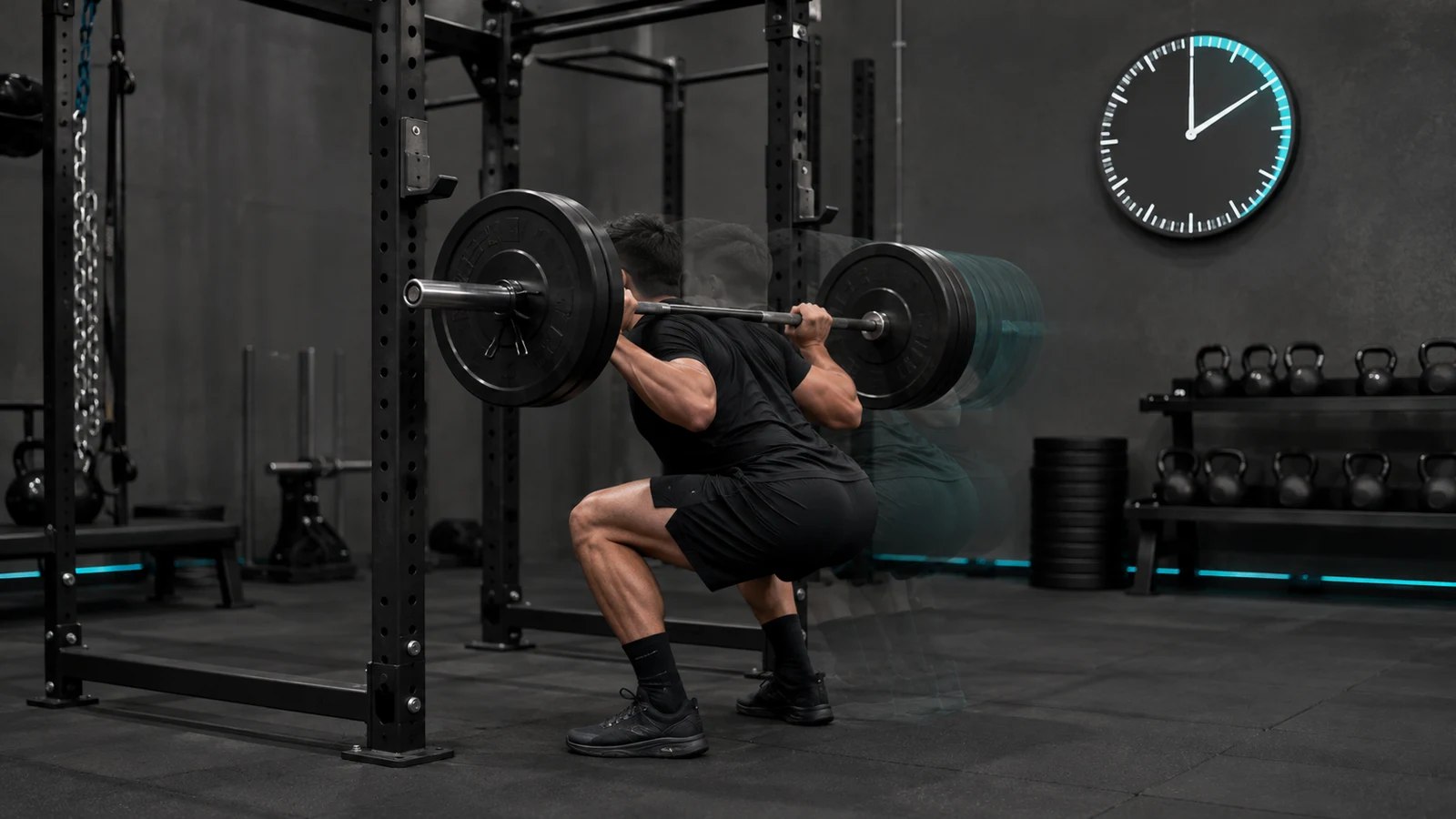
A crossover study compared slow and traditional barbell squats taken to failure. The tempos redistributed stress rather than producing one universal winner.
 Training
Flywheel Training Microdosing: One Set Daily vs One Weekly Session
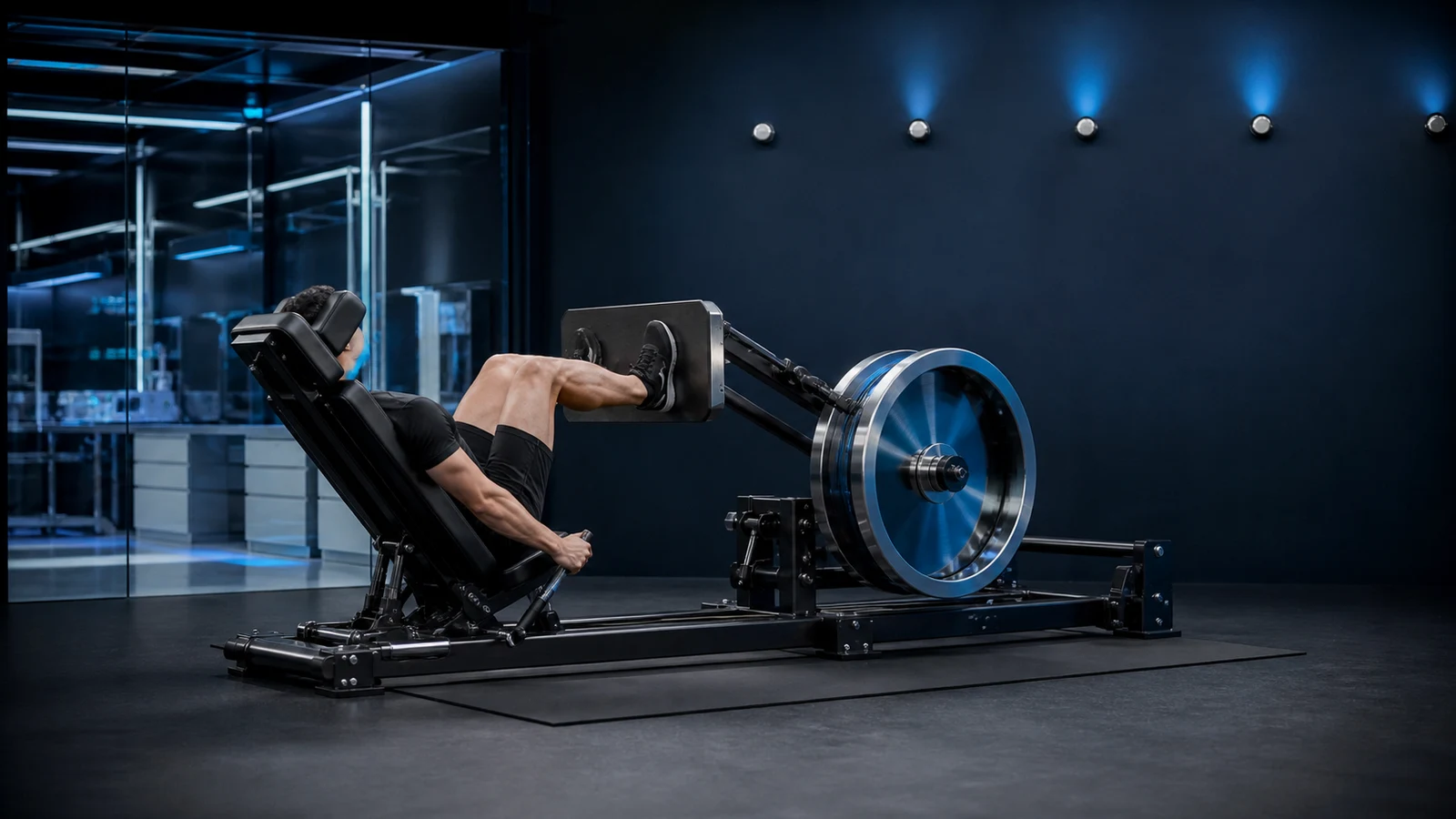
A six-week trial split the same 30 flywheel leg-press sets into daily microdoses or one weekly session. Strength gains were similar, but soreness and architecture differed.
 Training
Resistance Bands vs Free Weights for Older Adults: Results of a 12-Week Trial
A 12-week randomized trial found that elastic-band and free-weight programs both improved several functional tasks in adults around age 67, with no clear overall winner.